
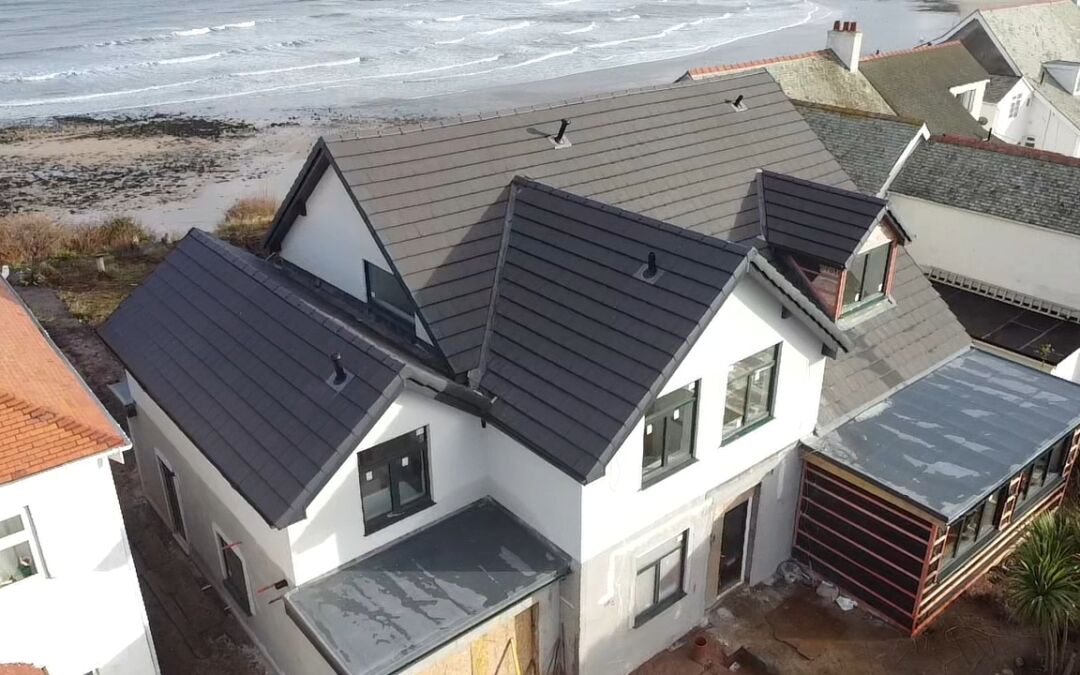
If you have been told your roof needs replacing, one of the first things you will want to know is how long the work is going to take. A new roof is a big job, and it is natural to wonder how long you will have scaffolding up, how much disruption to expect, and whether your home will be exposed to the weather while the work is going on.
The honest answer is that it depends on the size of the roof, the material you choose and, here in North Wales, the weather. But most homeowners are pleasantly surprised by how quickly a well-organised roofing team can strip and replace a roof. This guide explains typical roof replacement timescales, what happens at each stage, and the things that can speed a job up or slow it down.
How Long Does a New Roof Take? The Short Answer
As a rough guide, here is how long a new roof installation typically takes once work starts on site:
- Garage or small flat roof: usually one day
- Flat roof on an extension or dormer: one to two days
- Tiled roof on a terraced or semi-detached house: around three to five working days
- Natural slate roof on a terraced or semi-detached house: around one to two weeks
- Large detached property or complex roof: two to four weeks, sometimes longer
These figures cover the roofing work itself. Scaffolding normally goes up a day or two before the roofers start and comes down shortly after they finish, so the scaffold may be on your property for a little longer than the roof work takes.
Why Slate Roofs Take Longer Than Tiled Roofs
Natural slate is the traditional roofing material across Conwy, Llandudno and much of North Wales, and it is one of the most durable roof coverings you can choose. It is also slower to install than concrete or clay tiles.
Each slate is individually holed, graded by thickness and nailed in place, and the slates need to be laid carefully to keep the courses straight and the gauge consistent. Concrete interlocking tiles are larger and quicker to fix, so a tiled roof covering the same area can be completed in noticeably less time.
If you are re-roofing with reclaimed slates, a little extra time may be needed to sort and grade the slates before they go on. It is time well spent, particularly on older properties or in conservation areas where matching the original roof matters. You can read more about the differences between materials in our guide to Welsh slate vs imported slate.
What Affects How Long a Roof Replacement Takes?
The Size and Shape of the Roof
A simple gable roof on a terraced house is far quicker to replace than a hipped roof with valleys, dormers, chimneys and roof windows. Every hip, valley and abutment needs extra cutting and detailing, which adds time to the job.
The Roofing Material
As covered above, natural slate takes longer than tiles, and flat roofing is usually the quickest of all. An EPDM rubber flat roof on a garage or extension can often be stripped and replaced in a single day. If you are weighing up a flat roof, our article on how long an EPDM flat roof lasts is worth a read.
The Condition of the Roof Structure
Once the old covering is stripped off, the timbers underneath can be properly inspected for the first time. If rafters, wall plates or decking boards are rotten or damaged, they will need to be repaired or replaced before the new roof goes on. This is one of the most common reasons a job runs over its original estimate, and it is why a good roofer will always tell you what they find rather than covering it up.
Chimneys, Leadwork and Extras
Rebuilding or repointing a chimney stack, renewing lead flashings, fitting roof windows or replacing fascias and soffits while the scaffold is up will all add to the overall timescale. Doing these jobs at the same time is usually the most cost-effective approach, though, because you only pay for scaffolding once.
North Wales Weather
Weather is the biggest wildcard. Strong winds along the coast at Colwyn Bay, Rhos-on-Sea and Llandudno can make it unsafe to work at height, and heavy rain can stop work on the parts of the job that need dry conditions, such as flat roofing. A professional roofer will plan around the forecast and make sure the roof is protected at the end of every day, so a lost day to weather is an inconvenience rather than a risk to your home.
What Happens During a Roof Replacement?
Most pitched roof replacements follow the same basic sequence:
- Scaffolding goes up. This is usually erected a day or two before the roofers arrive, with edge protection for safety.
- The old roof is stripped. Slates or tiles, battens and old felt are removed in sections, and any reusable slates are set aside.
- Timbers are inspected and repaired. Any rotten or damaged timber is replaced at this stage.
- New membrane and battens are fitted. A breathable roofing membrane goes on first, followed by new treated battens set to the correct gauge.
- The new covering is laid. Slates or tiles are fixed from the eaves up to the ridge.
- Ridges, hips, valleys and flashings are finished. These details are what keep the roof watertight, so they are never rushed.
- Fascias, soffits and guttering are completed. If these are being replaced, they are often done towards the end of the job.
- Clean up and scaffold removal. The site is cleared, debris removed and the scaffold taken down.
Roofers normally strip and re-cover the roof one section at a time, so only a small area is ever open. Anything left exposed overnight is sheeted and secured against the weather.
Can You Stay in Your Home While the Roof Is Replaced?
Yes. Almost all homeowners stay at home during a roof replacement. There will be some noise during working hours, particularly while the old roof is being stripped, and it is a good idea to clear valuables out of the loft and cover anything stored up there, as dust and debris can fall through. Beyond that, day-to-day life carries on largely as normal.
When Is the Best Time of Year for a New Roof?
Late spring through to early autumn generally offers the longest days and the most settled weather, which means fewer interruptions. That said, roofs can be and are replaced all year round, including in winter. Experienced roofers simply work in smaller sections and keep a closer eye on the forecast. If your roof is failing, it is better to replace it sooner rather than wait for summer and risk water damage inside. Our guide to preparing your roof for winter has more on looking after your roof through the colder months.
It is also worth booking well ahead if you would like the work done in the busier summer months, as good roofers tend to fill their diaries early.
Repair or Replace?
Not every problem roof needs replacing. Slipped slates, a cracked ridge tile or a failed flashing can often be fixed in a few hours. If you are not sure whether your roof needs a full replacement, our article on roof replacement vs roof repair explains how to weigh it up, and we are always happy to give you an honest opinion on whether a roof repair will do the job.
Talk to Regan Roofing
Regan Roofing are experienced roofers based in Conwy, covering Colwyn Bay, Llandudno and the surrounding areas of North Wales. We install new slate, tiled and flat roofs for domestic and commercial properties, and every job is carried out by our own experienced team.
Before any work starts we will give you a clear, fixed quote along with a realistic idea of how long your roof will take, so you know exactly what to expect. Get in touch for a free, no-obligation quote or call us on 01492 518524.